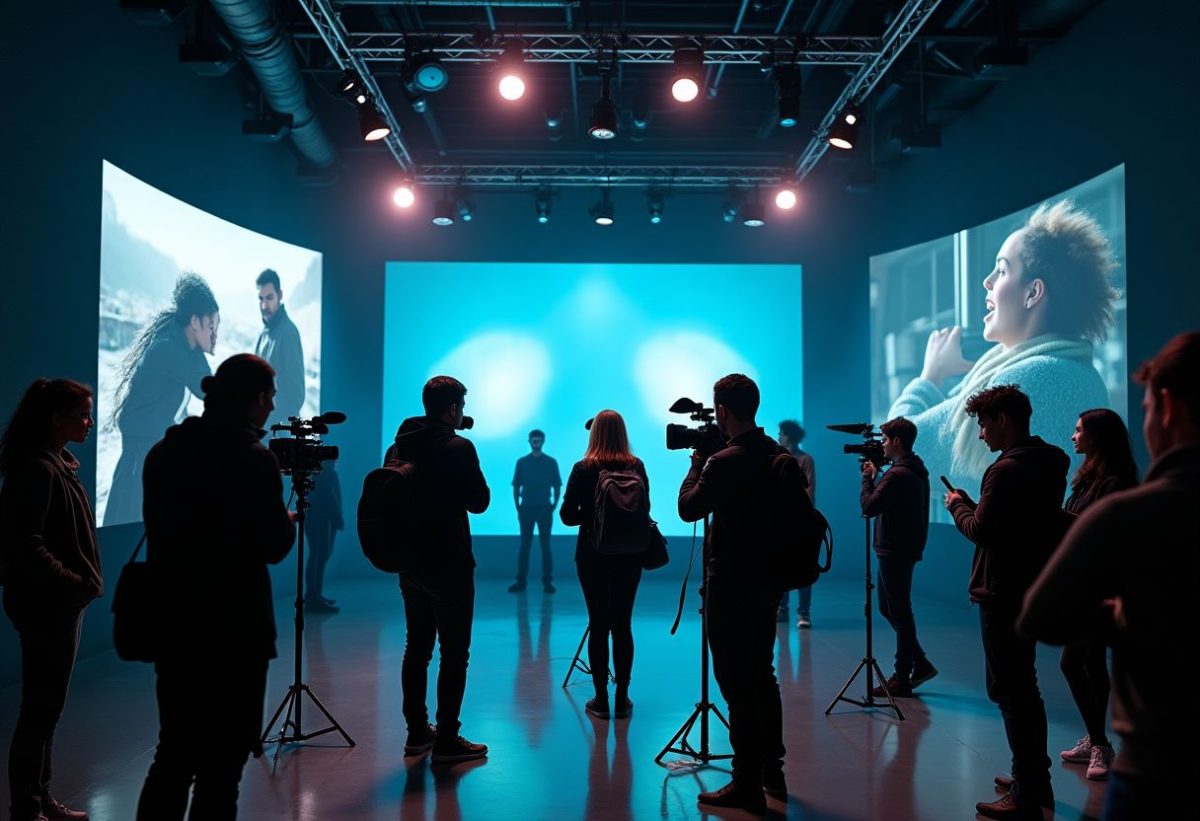
The audiovisual world attracts many enthusiasts eager to turn their creativity into a profession. The enthusiasm for image and sound continues to grow, driven by technological innovations and the rise of digital platforms. The audiovisual school then presents itself as an ideal entry point into this thriving universe. These institutions offer comprehensive training, combining theory and practice, to prepare students for the numerous challenges of this dynamic industry. Whether to become a director, sound engineer, editor, or producer, specific training is essential to carve out a place in this highly competitive sector.
The different training paths
Audiovisual schools offer a variety of paths tailored to the professional aspirations of students. Here is a detailed overview.
The programs offered by these institutions generally include diplomas ranging from BTS to Master’s degrees. Each level of training aims to develop specific skills, whether in shooting, post-production, or project management. Some students opt for a Bachelor’s in cinema, which focuses on the creative and narrative aspects, while others prefer a BTS Audiovisual, oriented towards the technical and practical aspects of the profession.
Training at a film school also offers the opportunity to specialize in specific areas such as editing, sound, production, or special effects. These specializations allow students to focus on their preferred fields while developing sharp expertise.
Careers in audiovisual
Joining an audiovisual school opens the door to a multitude of exciting careers. Each profession requires a set of specific skills.
- Director: Responsible for the artistic creation of a film or show, they direct the actors and the technical team.
- Sound engineer: They capture and modify sounds to ensure optimal sound quality.
- Editor: In charge of assembling the filmed sequences, they contribute to the visual storytelling.
- Producer: They oversee the realization of an audiovisual project, from its conception to its distribution.
Each of these professions requires solid technical skills, a good ability to work in a team, and a pronounced artistic sensitivity. Audiovisual schools, by providing specific courses and offering internships, prepare students for these various careers.
The advantages of practical training
Practice plays a central role in the training offered by audiovisual schools. Students are often encouraged to collaborate on real projects.
An immersion in the professional world is essential to adapt to the demands of the sector. Practical workshops allow students to handle professional equipment and experiment with the techniques learned in class. This practical experience is complemented by internships, where students can observe and participate in the creation of audiovisual projects under the supervision of seasoned professionals.
Feedback from former students reveals the importance of these practical experiences in acquiring concrete skills and building a professional network, key elements for success in the audiovisual industry.
The challenges and opportunities in the audiovisual sector
The audiovisual sector, in constant evolution, presents challenges but also unprecedented opportunities for new graduates.
Technological advancements continually transform industry practices. The emergence of new distribution platforms like streaming services disrupts consumption patterns while offering new outlets for content creators.
Audiovisual professionals must therefore constantly adapt their skills to remain competitive and innovate.