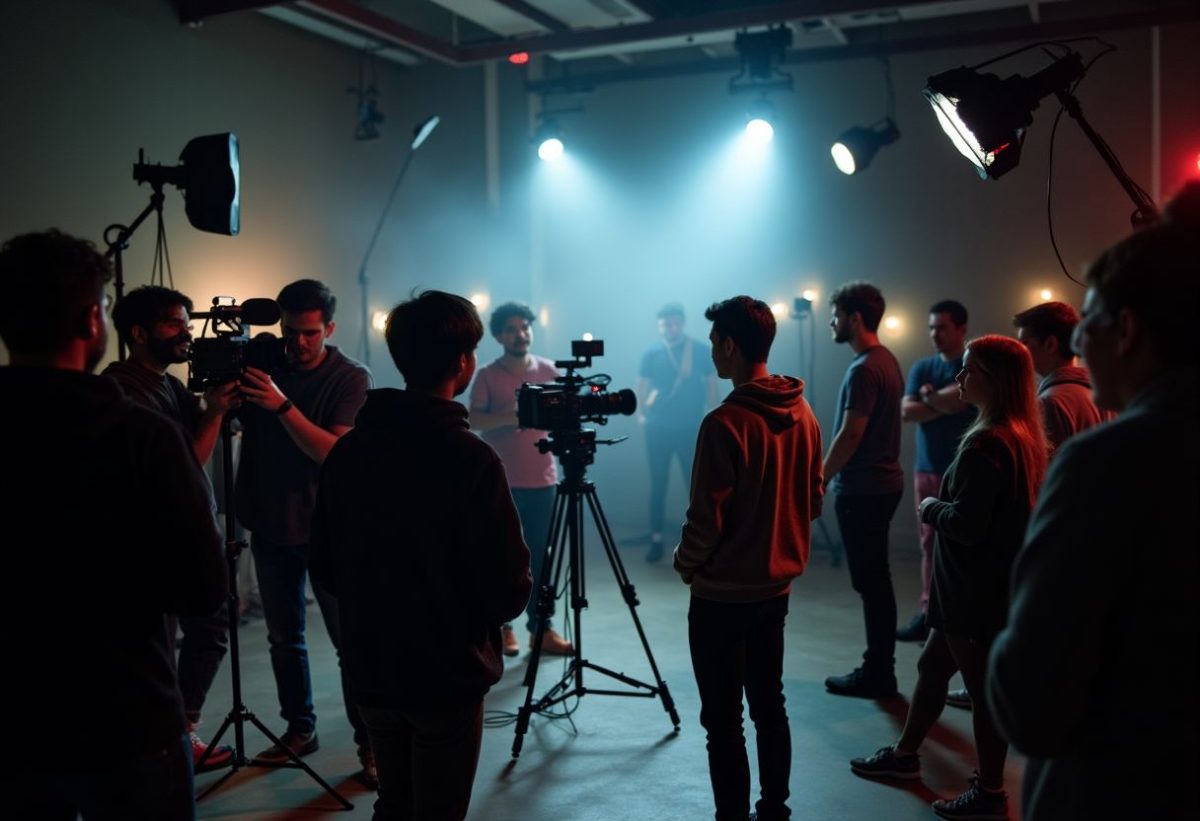
In a world where image and sound play a crucial role, audiovisual education stands out as an essential vector for those who wish to turn their passion into a profession. Every year, thousands of young aspirants turn to an Audiovisual School to acquire the skills necessary for creating captivating content. These institutions do not only impart technical know-how; they also encourage artistic expression and innovation, paving the way for careers that are as diverse as they are exciting. Whether one is drawn to directing, editing, sound, or production, adequate training can transform screen dreams into professional realities.
The training offered: a diverse range for varied careers
Audiovisual schools offer a multitude of training programs tailored to every profile and ambition, from introductory courses to mastering the most advanced techniques.
The initially generalist programs allow students to touch on all aspects of audiovisual work, whether it involves directing, editing, screenwriting, or production management. These courses, often titled Bachelor or License, provide a solid foundation upon which students can build their later specialization.
For those who wish to deepen their expertise, more specialized training such as Masters or Higher Diplomas focus on specific areas like animation, special effects, or sound design. These advanced programs allow for refinement in a precise sector and help students stand out in the job market.
Finally, continuing education programs are also available for professionals looking to update their knowledge on new technologies or expand their skill set, ensuring a constant adaptation to industry changes.
From technical skills to artistic expression: a comprehensive training
Beyond techniques, audiovisual training aims to develop artistic sensitivity, an understanding of narrative codes, and an ability to innovate.
- Learning technological tools: Students become familiar with the latest editing software, cutting-edge cameras, sound equipment, and digital production tools, which are essential for producing projects of professional quality.
- Creativity and artistic expression: Schools encourage the exploration of personal styles and the search for new forms of visual and auditory storytelling.
- Mastery of narrative codes: Particular attention is given to the study of scripts, dialogues, and staging to create captivating stories that resonate with the audience.
- Innovation and adaptation: By integrating current trends such as virtual reality and interactive production, students learn to anticipate and adapt to sector developments.
The professional network: a major asset for integration
More than just a place of learning, an audiovisual school represents a true springboard into the professional world thanks to a strong and diverse network.
The partnerships established with companies in the sector allow students to benefit from concrete immersion in the working world. These collaborations often result in internships, supervised projects, or practical workshops, providing a realistic glimpse of the job’s demands.
Alumni, who have become recognized professionals, form a valuable alumni network. They share their experiences, offer mentoring opportunities, and open doors to potential jobs. This link between generations fosters a continuous transmission of knowledge and best practices.
Finally, participation in festivals, competitions, and other industry events, often encouraged or even organized by the schools themselves, is an excellent way to get noticed and make valuable contacts for a future career.