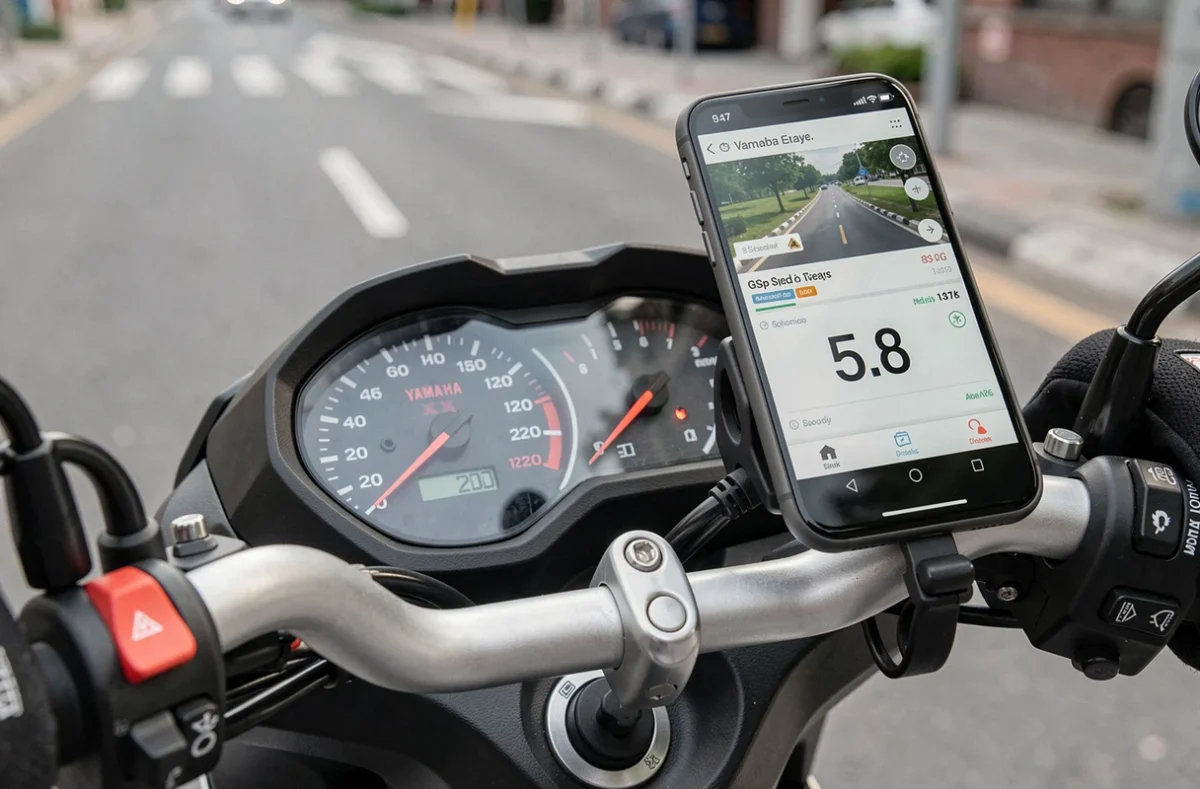
You are riding on a highway, the Yamaha XMAX 125’s speedometer set at 118 km/h, while your GPS application calmly shows 108 km/h. A difference of ten kilometers per hour, sometimes more. This situation confuses many 125 scooter riders, especially when they discover the gap for the first time on a long trip. The discrepancy between the speedometer and GPS on the XMAX 125 is not random: it is explained by precise mechanisms, both technical and regulatory.
CVT Variator and Wheel Sensor: What Happens Under the XMAX 125’s Fairing
The XMAX 125’s speedometer does not measure your ground displacement. It counts the rotations of the front wheel using a magnetic sensor, then multiplies this number by the theoretical circumference of the tire. The displayed result thus depends on a calculation based on a fixed data point: the tire diameter as it comes from the factory.
The problem is that this data is never quite accurate in real conditions. When you compare the max speed of the XMAX 125 between the speedometer and GPS, you are actually comparing two measurement methods that do not start from the same physical principle.
The GPS, on the other hand, calculates your position several times per second using satellites. It deduces the speed from the actual movement between two points. No wheel, no tire is involved in the equation. That’s why the two values systematically diverge.
Why the CVT Transmission Does Not Directly Influence the Speedometer
A common confusion arises on forums: the CVT variator would distort the speedometer reading. In reality, the variator does not intervene in the calculation of the displayed speed. The sensor is located on the wheel, not on the engine output.
The CVT transmission plays an indirect role: it determines the engine speed at a given speed. When the variator is at its high limit, the engine runs at its maximum speed for the achieved speed. The XMAX 125 develops about 12 hp for 167 kg in running order, which means that at full load, the slightest resistance (wind, slope, passenger) reduces the actual speed without the speedometer reacting proportionally.
UN-ECE Regulation No. 39: The Margin Imposed on Scooter Speedometers
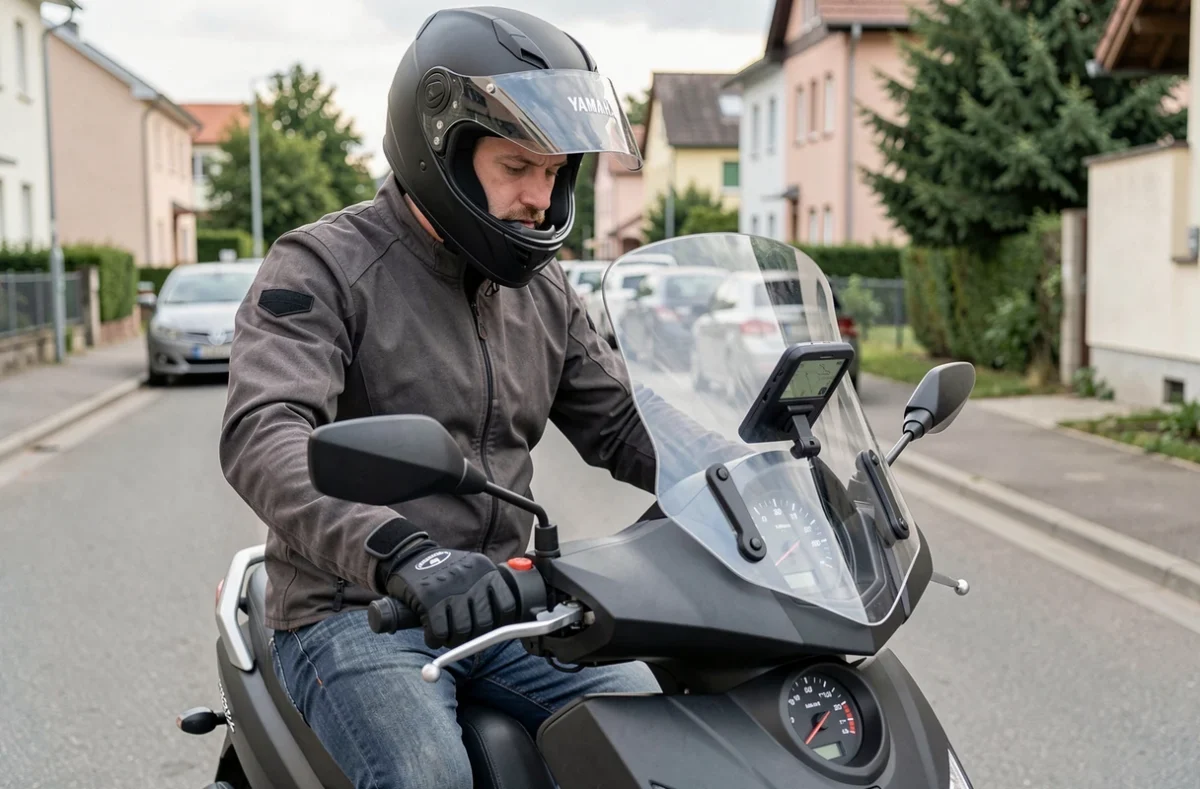
You may have noticed that your speedometer always shows more than the GPS, never less? This is not a coincidence. UN-ECE Regulation No. 39 imposes a clear rule: a speedometer must never indicate a speed lower than the actual speed. However, it can display a higher value, within a defined margin.
In practice, the manufacturer programs the speedometer to overestimate the speed. This overestimation protects the manufacturer: if the speedometer showed less than reality and a driver got caught speeding, the manufacturer’s liability could be engaged.
What This Means for the XMAX 125 Rider
For a 125 scooter that runs close to its maximum speed, this margin has direct consequences. When the speedometer shows 115 km/h, the GPS speed often ranges between 105 and 110 km/h. In practice, this means that your actual margin relative to speed limits is more comfortable than you think.
The gap is not constant: it slightly increases with speed. At 50 km/h on the speedometer, the difference may be limited to 3 or 4 km/h. At full speed, it regularly exceeds 8 km/h.
Tire Pressure and Wear: The Variables That Widen the Gap on the XMAX 125
The XMAX 125’s speedometer uses a theoretical tire circumference. Any modification to this circumference skews the calculation. Three common factors exacerbate the gap:
- Insufficient tire pressure: an under-inflated tire flattens more on the ground, its effective circumference decreases, and the speedometer overestimates the actual speed even more
- Tread wear: a worn tire has a slightly reduced diameter, which produces the same effect as under-inflation, albeit less noticeable
- Fitting a tire of a different size: replacing an original tire with a wider or narrower model changes the circumference and makes any previous GPS readings incomparable
A rider comparing their GPS performance after a tire change without checking the exact size risks incorrectly concluding that their scooter has lost top speed.
Smartphone GPS: A Reliable, But Not Perfect Reference
The GPS remains the closest measurement to actual speed. It does not depend on tires or the wheel sensor. However, the accuracy of the GPS depends on the quality of the satellite signal received by the smartphone.
In dense urban areas, between tall buildings, the signal bounces off facades. The position calculation loses precision, and the displayed speed can fluctuate by a few km/h. On a clear highway, the GPS measurement is much more stable and reliable.
Refresh Rate and Latency
A often overlooked point: a smartphone’s GPS takes a brief moment to recalculate speed after acceleration or braking. This delay, on the order of one to two seconds, is insignificant at stabilized speeds. It can distort the reading during rapid acceleration, which explains why some GPS readings after a turn seem inconsistent.
Speedometer-GPS Discrepancy of the XMAX 125: What It Means in Real Driving
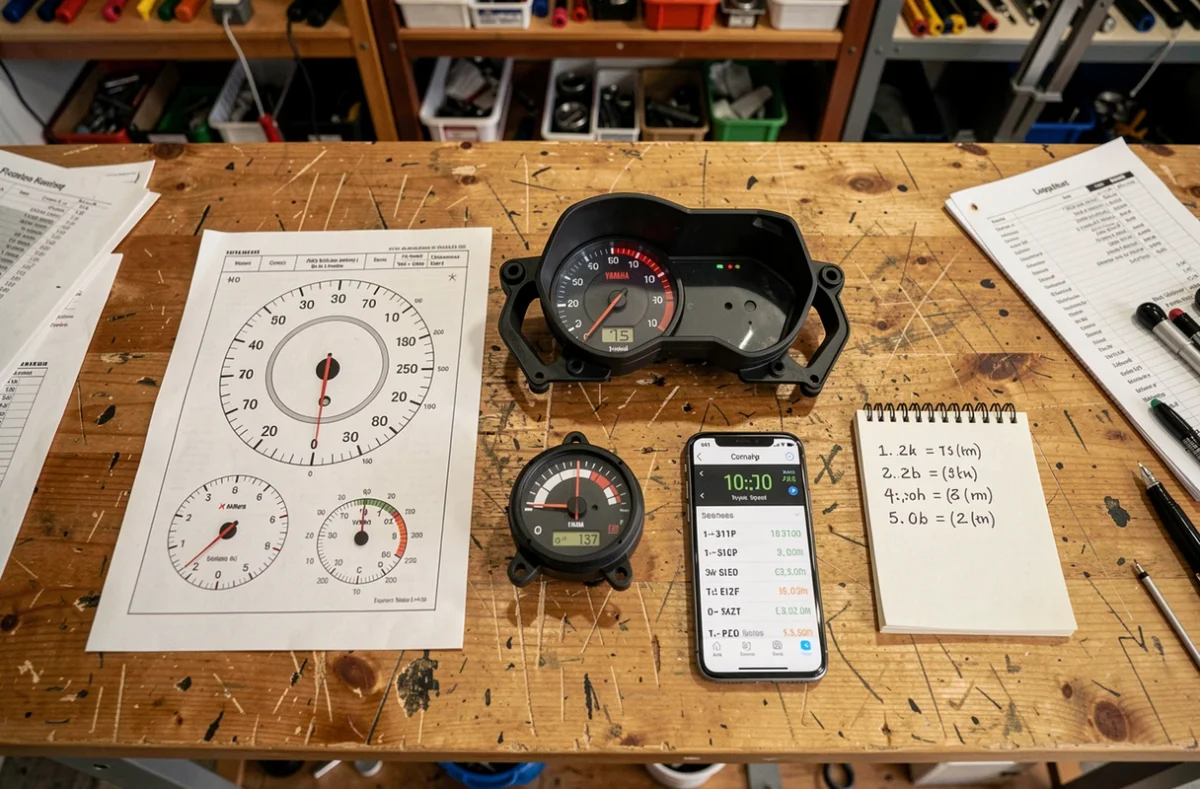
The discrepancy between the speedometer and GPS of the XMAX 125 is not just a technical curiosity. It has a direct impact on how you perceive your scooter’s performance and your margin relative to speed limits.
When the speedometer shows 118 km/h and the GPS indicates 108 km/h, your scooter is actually running just above 100 km/h in certain configurations (passenger, headwind, slight slope). The actual top speed of the XMAX 125 depends as much on riding conditions as on the engine itself.
This observation has a practical consequence on the highway: the XMAX 125 is already at its maximum speed with the variator at its limit. There is no power reserve left for overtaking or brief acceleration. The speedometer reading gives a false impression of margin, while the GPS reveals that the scooter is already at its mechanical limit.
Keeping an eye on the GPS rather than the speedometer allows for a better assessment of your actual position in traffic and helps anticipate situations where the available power will not be sufficient to overtake.