After 50, social networks are reconfiguring. Colleagues drift away with retirement, children leave the home, and some couple friendships do not survive a separation. Creating new friendships at this age relies on specific mechanisms, different from those that worked at 20 or 30.
Objective isolation and perceived loneliness: two distinct problems after 50
The Solitudes 2025 study, conducted by Crédoc for the Fondation de France with around 3,000 people, distinguishes between two realities that are often confused. Objective isolation refers to a measurable lack of contacts (few meetings, limited network). Perceived loneliness relates to relational dissatisfaction, even when one is around people.
This distinction changes the strategy. An objectively isolated person needs to multiply opportunities for encounters. A person who is surrounded but dissatisfied needs to transform superficial contacts into deeper relationships.
Before seeking to “make friends,” it is useful to identify which of these two problems dominates. The answer guides towards very different actions, and several tips from Green Seniors for making friends help clarify this first step.
Proximity links: the underestimated lever for creating senior friendships
Classic guides recommend joining clubs or signing up for activities. This is relevant, but a more immediate lever is often overlooked: neighborhood and local small businesses.
Regularly greeting the same people at the market, exchanging a few words with a neighbor while taking out the trash, stopping by the local café: these repeated micro-interactions create a relational soil. Adult friendship almost never arises from a single significant encounter. It is built by accumulating brief contacts in a familiar context.
Why regularity matters more than intensity
Research on adult sociability converges on one point: the frequency of contacts predicts the emergence of a friendship better than the duration or quality of a single exchange. Running into the same person at the park three times a week for a month creates more closeness than spending an entire evening with a stranger you will never see again.
This is why occasional activities (a weekend cooking class, an organized trip) rarely produce lasting friendships. They lack repetition. A weekly class is better than an exceptional event.
Social activities after 50: criteria for choosing those that work
Not all activities are equal for forming relationships. Some encourage exchanges, while others keep everyone in their bubble. Here are the criteria that distinguish an activity conducive to friendship from one where you remain alone among many.
- The group size allows for conversation: a workshop of eight people creates more bonds than a lecture with fifty participants
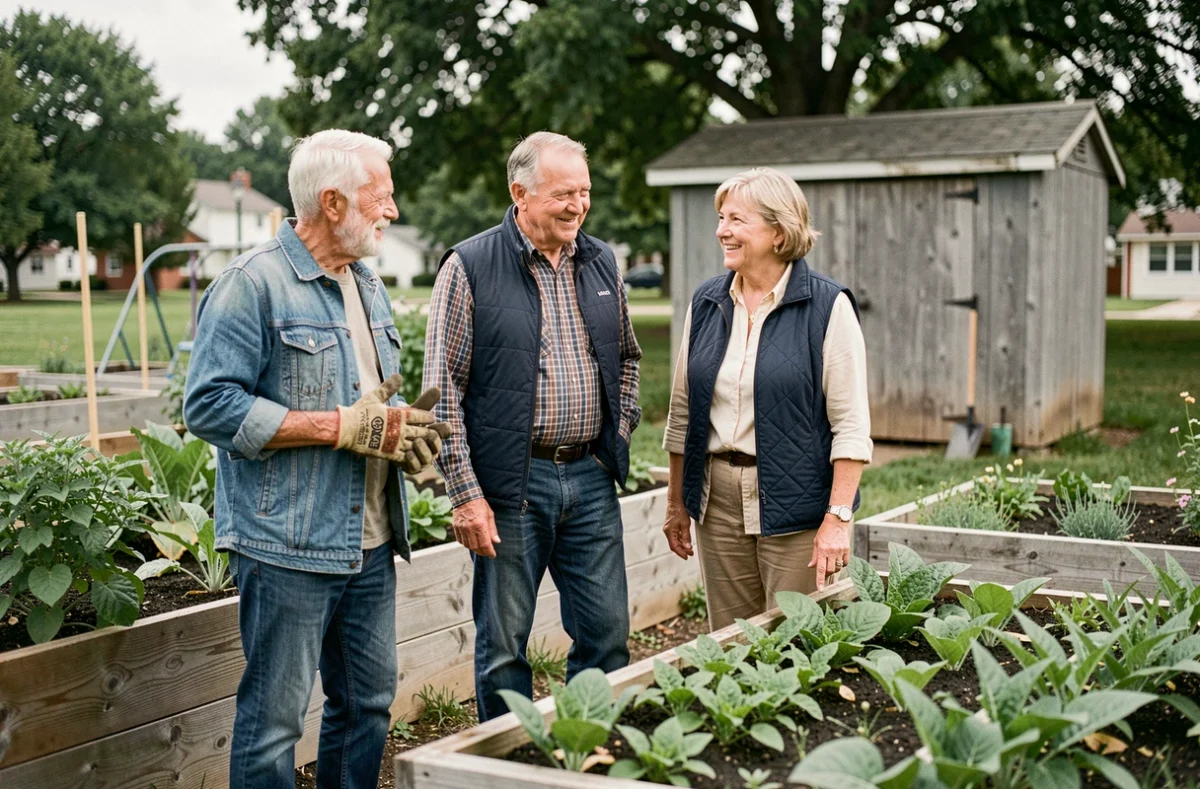
- The activity includes breaks or collaboration: small group hiking, shared gardening, community workshops offer moments where conversation comes naturally
- The setting repeats weekly in the same place, with the same people: this stability is the determining factor for transforming acquaintances into friends
- The commitment required is moderate: regular volunteering for two hours a week is more sustainable than a project that demands total availability

City or countryside: two different realities
The Solitudes 2025 study reveals that relational isolation is more present in rural areas, while the feeling of loneliness is more often reported in cities. In short, rural people lack contacts, and urban dwellers lack depth in their contacts.
In rural areas, the priority is often logistical: finding an accessible activity without traveling thirty kilometers. Local associations, markets, and village festivals remain the most realistic entry points.
In cities, the range of activities is abundant, but the risk is flitting from one to another without ever deepening. Choosing a single activity and sticking with it for several months yields better results than testing five simultaneously.
Moving from acquaintance to friendship: the second meeting
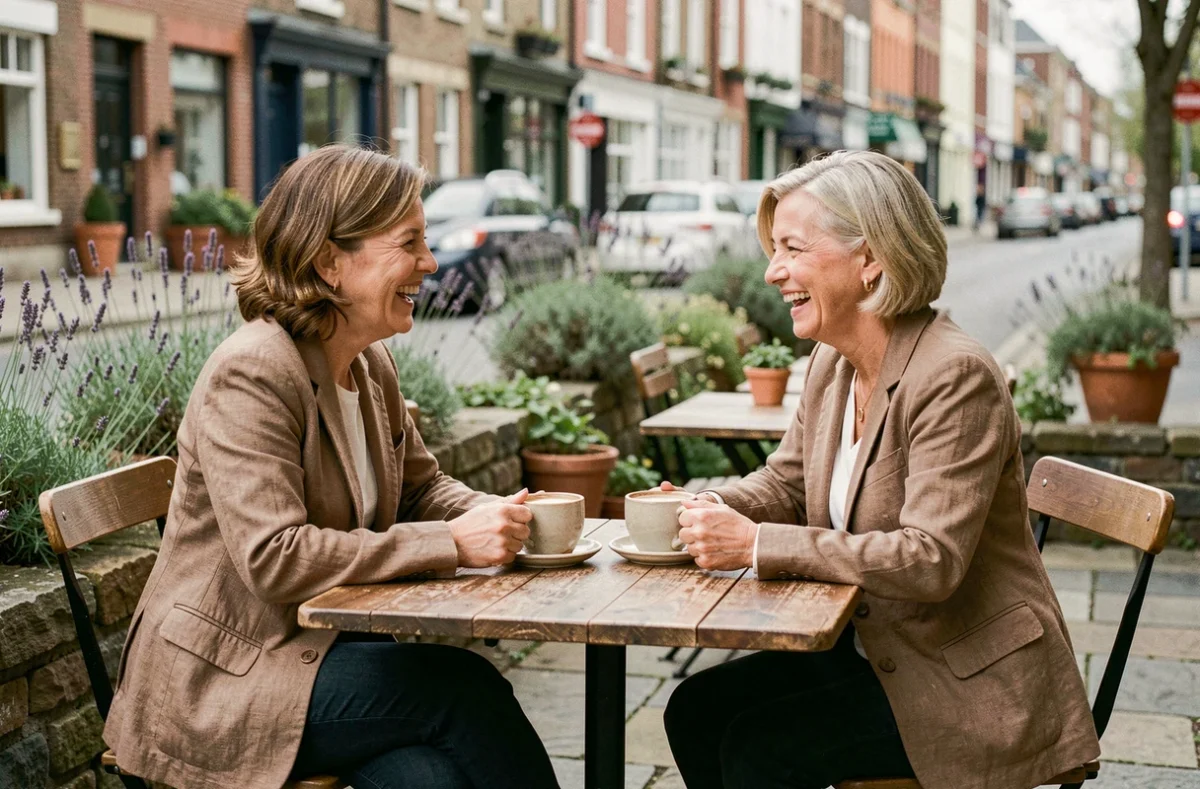
The real bottleneck in creating friendships after 50 is not the first contact. It is the transition to the second meeting, outside the initial setting. Suggesting a coffee after a class, proposing a walk on a Sunday, sending a message to check in: this initiative is the gesture that most people hesitate to make.
The fear of bothering others holds many people back. It is based on a well-documented bias: we systematically underestimate the interest others have in us. The likelihood that a proposal will be received positively is much higher than we imagine.
Reactivating dormant connections
Reconnecting with old acquaintances is often more effective than starting from scratch. A former colleague, a neighbor from ten years ago, a classmate: these people already share a foundation of common experiences. A simple message is sometimes enough to revive a relationship that simply lacked maintenance.
This approach is particularly suited for those who feel lonely despite having an existing circle. Rather than seeking something new, deepening or reviving what exists meets the need for relational proximity.
Creating friendships after 50 does not require a special talent for conversation or a packed schedule of activities. The most reliable factor remains regularity: frequenting the same places, seeing the same faces, and accepting that the relationship takes time to mature before becoming a true friendship.