Contemporary art encompasses such varied practices that it becomes difficult to know where to start when looking for an original work. Between painting, installation, digital creation, and artist editions, access channels have multiplied without quality benchmarks keeping pace. This article measures the gaps between the different formats for acquiring and discovering contemporary works, relying on observable dynamics in France.
Digital Art and NFTs vs. Physical Works: What the Contemporary Market Reveals
The boundary between digital art and physical art is blurring in the exhibition spaces themselves. La Demeure du Chaos, an open-air contemporary art museum near Lyon and the headquarters of Artprice by Artmarket, now integrates works related to NFTs and crypto-art aesthetics directly into its visitor pathway. It is no longer a phenomenon confined to online platforms.
This hybridization alters the market reading for collectors. A painting or sculpture remains a unique, transportable object, insurable according to known grids. An NFT linked to a physical work creates a dual value register, that of the object and that of the token, which do not follow the same curves.
| Criterion | Physical Work (painting, sculpture) | Digital Work / NFT |
|---|---|---|
| Authentication | Certificate from the artist or gallery | Blockchain (public traceability) |
| Storage | Physical space, conservation conditions | Digital wallet, decentralized server |
| Resale | Gallery, auction house, private sale | Online marketplace, automatic royalties for the artist |
| Access for the General Public | Exhibition, studio visit, fair | Online browsing, augmented reality |
| Main Risk | Counterfeiting, degradation | Market volatility, longevity of the medium |
This table does not favor one format over another. It shows that the choice depends on the relationship to risk and use: exhibiting at home, speculating, or supporting an artist do not involve the same channel.
Online galleries like ricci-art.net allow exploration of original works without going through traditional circuits of fairs or auction houses, opening up opportunities for novice collectors.
Lyon Biennale 2026 and Immersive Events: Contemporary Art as a Territorial Experience
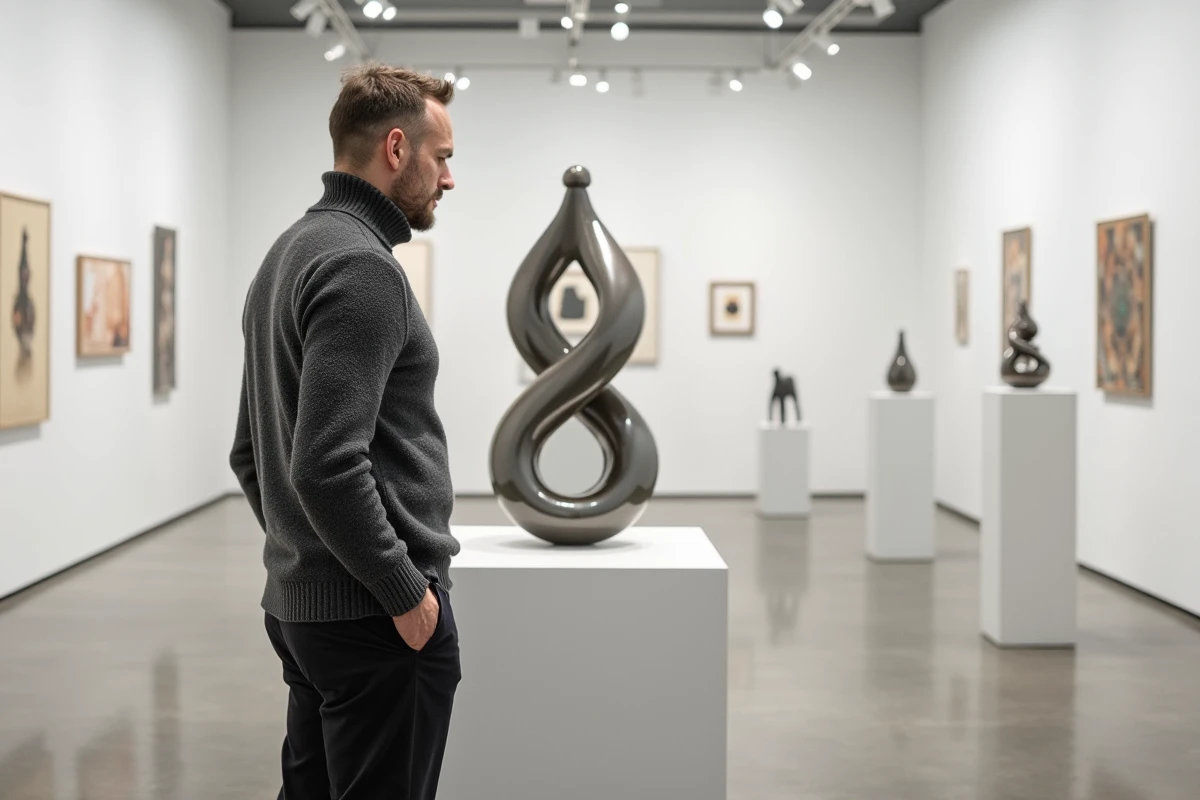
Contemporary art in France is not limited to gallery exhibitions. The Lyon Contemporary Art Biennale, scheduled from September 19 to December 13, 2026, deploys its exhibitions across several locations in the metropolis. This territorial format transforms an entire city into an artistic journey.
Alongside this large-scale event, more targeted proposals exist. The “Thursdays at La Demeure du Chaos” offer themed night visits that add an immersive dimension absent from traditional museums. The European Night of Museums, for its part, saw MAC Lyon celebrate several decades of contemporary programming through performances.
These formats share a common point: they target an audience that does not necessarily visit galleries on a daily basis. Free access remains a major lever for the democratization of contemporary art. La Demeure du Chaos practices total free admission, making it a popular entry point into current artistic creation.
- Biennials and festivals allow discovering emerging artists in a non-commercial setting, without immediate purchase pressure.
- Night visits and performances alter the perception of works through the sensory context (light, sound, limited duration).
- Free venues attract a broader and younger audience, often first potential buyers of original works a few years later.
Original Works: Selection Criteria for Collectors and Enthusiasts
Acquiring an original work is not limited to a visual crush. Several technical parameters separate a thoughtful purchase from an impulsive one, and these parameters vary by medium.
Painting and Sculpture: Check Beyond Style
The certificate of authenticity issued by the artist or gallery remains the reference document. For painting, the condition of the support (canvas, wood, paper) determines the lifespan of the work as much as the pictorial technique itself. A poorly stretched canvas or a warped frame indicates a conservation issue, not an artistic flaw.
Provenance also matters. A work that has passed through a documented private collection or an exhibition in a recognized art center (Frac, museum, biennale) has a history that facilitates resale and reassures insurers.
Artist Editions and Art Books: An Underestimated Segment
The Presses du réel publishes monographs, catalogs, and artist editions in bilingual French-English versions. This editorial segment represents an accessible form of acquisition: the entry price is much lower than that of a unique work, and the value can increase if the artist gains visibility.
A signed limited edition constitutes a complete original work, not just a mere derivative product. The distinction relies on the print run (numbered, limited) and the artist’s signature.
Online Galleries and Physical Venues: Two Complementary Circuits for Contemporary Art
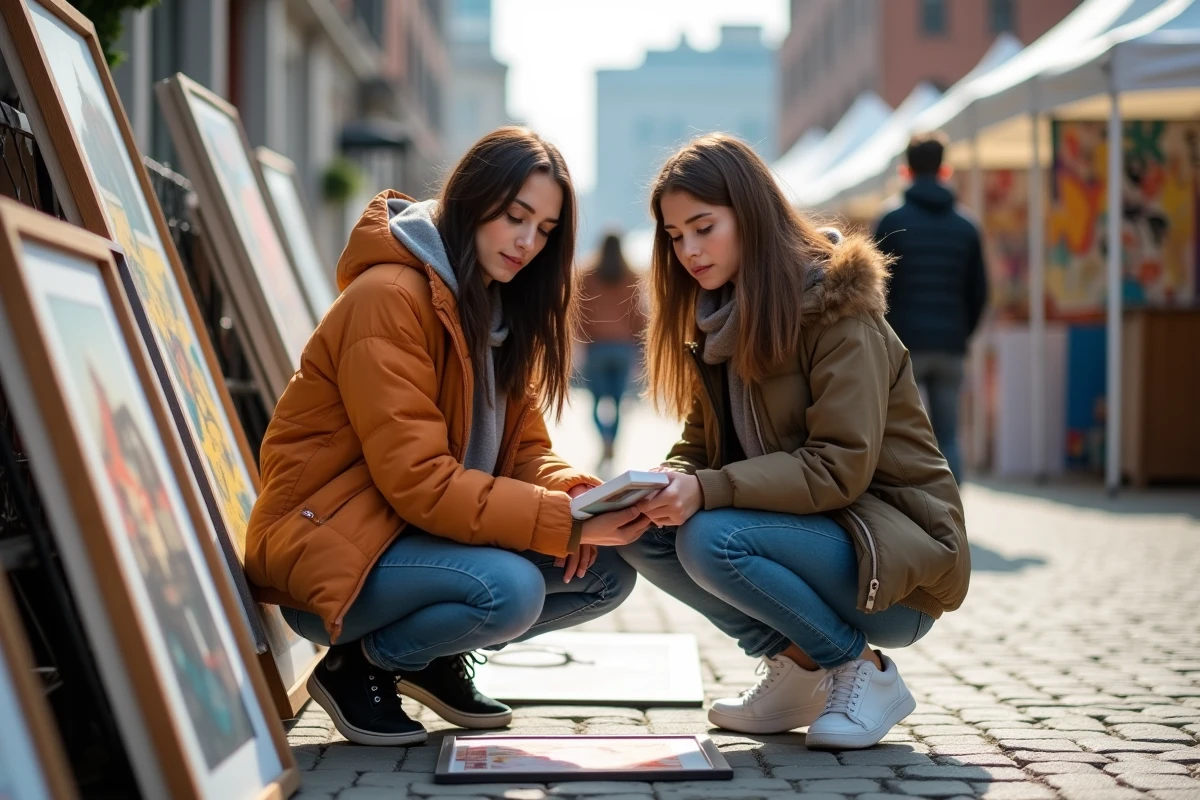
Physical galleries offer direct contact with the work, texture, scale, and light. Online platforms compensate with the breadth of the catalog and the ability to quickly compare several artists.
- In a gallery, the dialogue with the gallerist provides context about the artist’s approach and the positioning of the work in their creative journey.
- Online, detailed sheets (dimensions, technique, year, print run) allow for quick sorting, but do not replace the physical experience of facing a large-format canvas.
- Fairs and salons (Art Paris, FIAC now Paris+) combine both approaches over a short time, with a concentration of offerings that facilitates comparison.
The most reliable acquisition circuit combines both: online scouting, confirmation in a gallery or studio. Experienced collectors rarely proceed otherwise.
French contemporary art benefits from a dense network of Frac, art centers, and territorial events that has no equivalent in many European countries. This public infrastructure directly nourishes the private market by ensuring the visibility of artists even before their entry into the commercial circuit. For those seeking original works, the most productive starting point often remains a free public exhibition, well before the auction house.