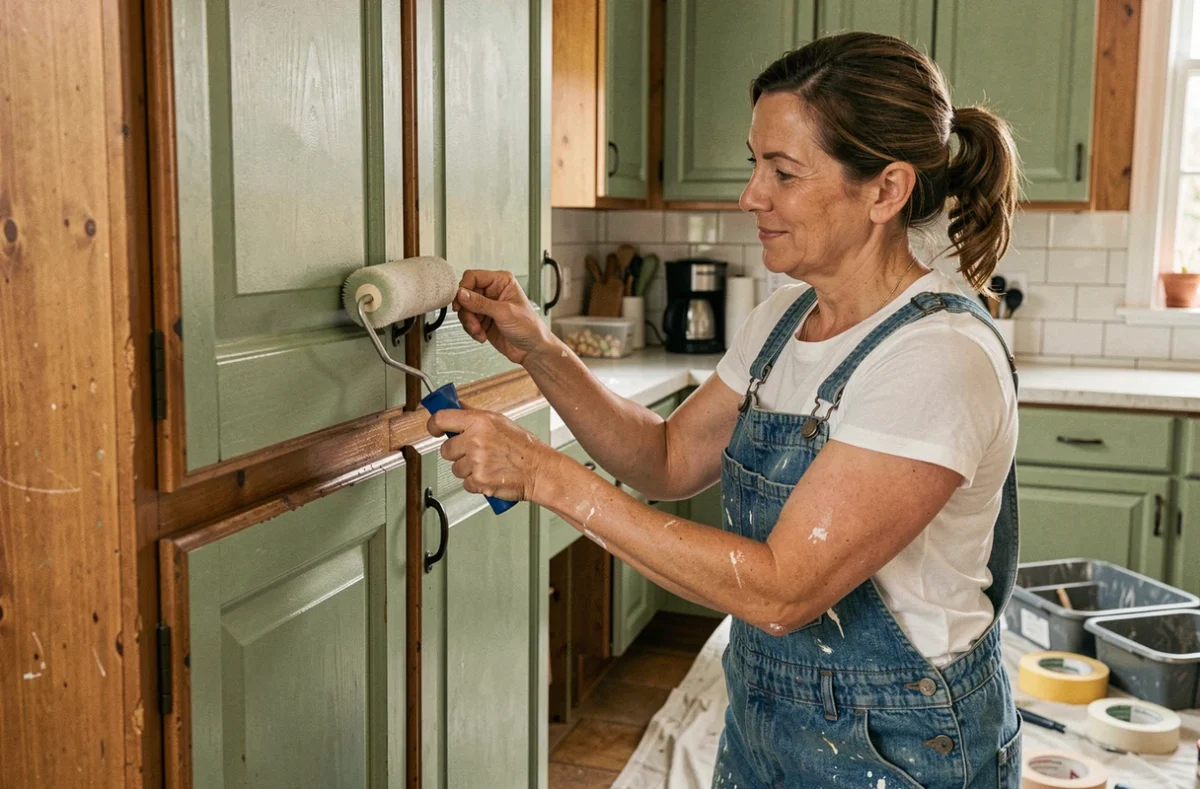
The V33 renovation paint refers to a range of products formulated to adhere directly to difficult surfaces (melamine, laminate, tiles, PVC) without the need for a prior primer. This technical property changes the way an interior renovation project is planned, both in terms of surface preparation and execution schedule.
Hardener and curing time: two constraints imposed by the product sheet
The V33 Perfection Renovation range includes a two-component system for certain references, notably the kitchen version. A hardener must be mixed with the base before application.
This mixture remains usable for less than ten days according to the instructions provided by retailers. In other words, splitting a project over several successive weekends with the same prepared pot exposes you to a loss of product effectiveness. It is better to calibrate the amount of mixture to the surface actually painted during the week.
The other trap concerns reusability. The film seems dry to the touch within a few hours, but the appropriate mechanical and chemical resistance is only achieved after about twenty days. During this period, avoiding shocks, aggressive cleaning, and objects being placed permanently on the painted surface is the best way to preserve the final finish.
When choosing V33 renovation paint for kitchen furniture, it is therefore necessary to plan not to use them normally for nearly three weeks.
Surface preparation before V33 paint: what changes depending on the surface
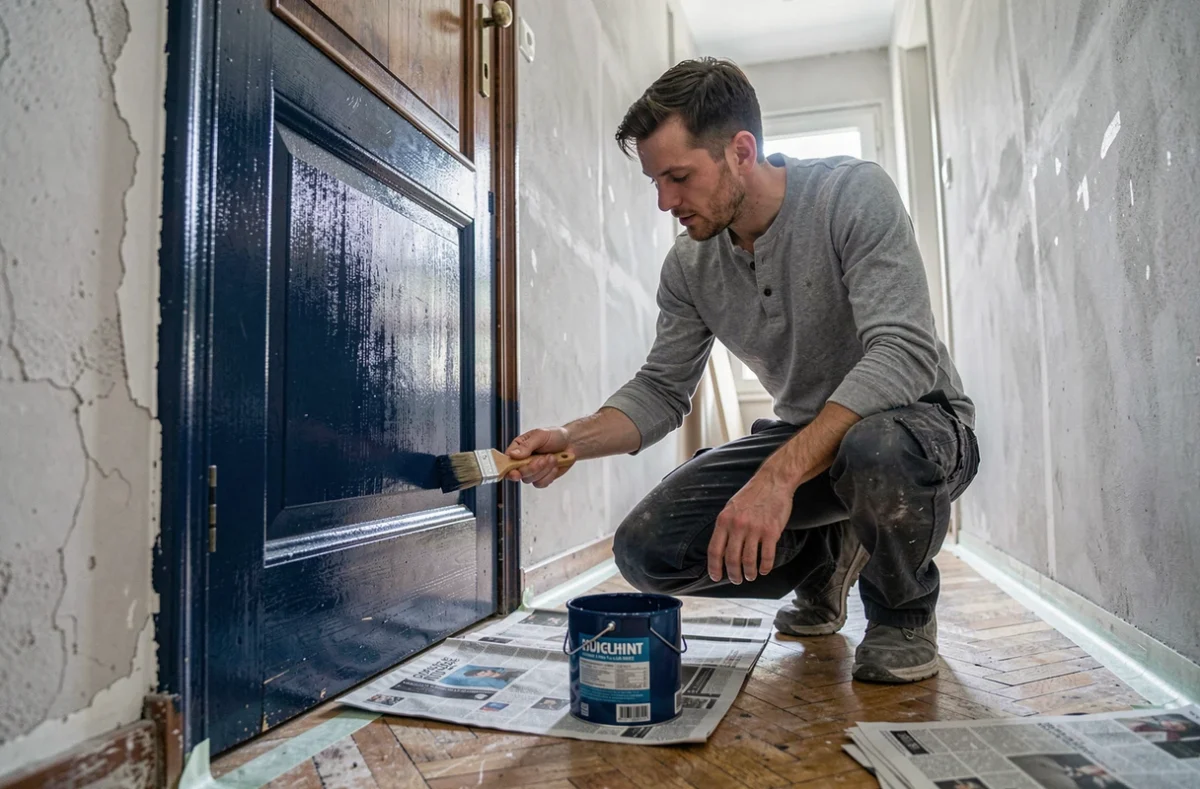
The argument “no primer” does not mean “no preparation.” The quality of the result depends almost entirely on what happens before opening the pot.
Kitchen furniture made of melamine or laminate
A complete degreasing using an appropriate cleaner (such as alkaline detergent or surface degreaser) is the first step. Residues of cooking grease, even if invisible, prevent any lasting adhesion.
The instructions then recommend a light abrasion with fine sandpaper to create micro-scratches that promote mechanical grip. Skipping this step on smooth melamine compromises the long-term adhesion of the paint film.
Bathroom wall tiles
Tiles impose an additional constraint: silicone joints. The instructions indicate to remove the silicone joints before application, then redo them after complete drying. This detail extends the duration of the project and requires a tube of sanitary silicone in addition to the painting materials.
For the cement joints between the tiles, a prior antifungal cleaning prevents trapping mold under the paint layer, a common problem in humid areas.
List of materials to prepare before starting
- Surface degreaser or alkaline detergent to remove greasy residues on melamine, laminate, or tiles
- Fine-grit sandpaper (around 240) to create mechanical grip on smooth surfaces
- Quality masking tape to protect adjacent areas (edges, handles, backsplashes)
- New sanitary silicone to redo the joints after painting the bathroom tiles
- Short-pile foam roller for a smooth, streak-free finish, suitable for renovation lacquers
Application in two coats: technique and common pitfalls
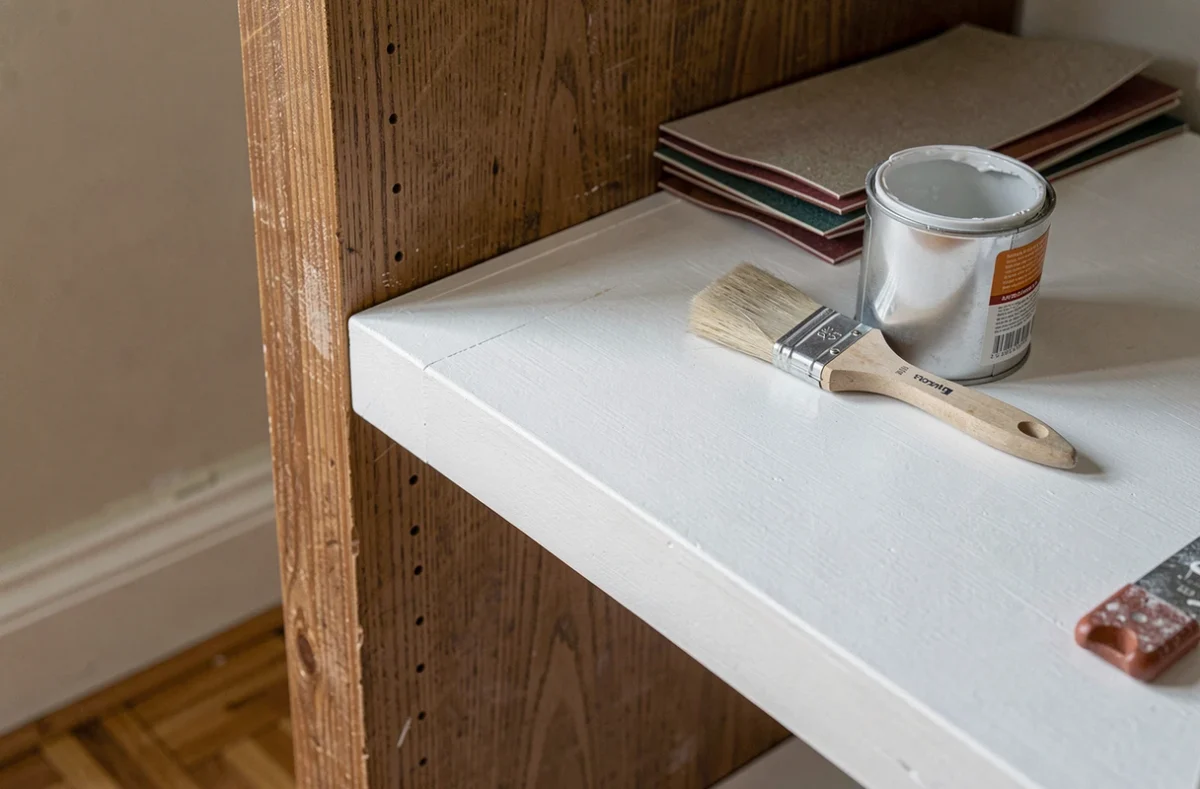
The Perfection Renovation range is applied in two coats. The first ensures coverage of the original surface, while the second evens out the finish and enhances resistance.
The drying time between the two coats must be strictly observed. Applying the second coat too early creates bubbles or an orange peel effect that sanding will not correct. Consulting the specific pot’s instructions remains the only reliable source for this timing, as it varies from one reference to another in the range.
Common mistakes on kitchen furniture
Painting the doors flat (dismantled and placed on trestles) yields a more uniform result than painting them in place. Vertically, the paint tends to run in the corners and form thick spots at the bottom.
The edges of the doors are often forgotten or treated last. Starting with the edges, allowing them to dry, and then painting the main faces helps avoid visible runs on the edges.
Horizontal surfaces: countertops and floors
For countertops, durability directly depends on adhering to the complete curing period. Placing heavy objects or cutting food directly on the surface before the end of this period compromises the longevity of the film.
A repainted countertop does not replace a new countertop in terms of scratch resistance. Renovation paint extends the aesthetic lifespan of the existing surface, but it remains a surface coating subject to mechanical wear.
User feedback on the durability of V33 renovation paint over time
Reviews collected on sales platforms are not uniform. Some users report satisfactory durability after several years, while others report early peeling, particularly in high-use areas (drawer handles, sink edges).
This disparity is largely explained by three factors:
- Whether or not surface preparation is respected (degreasing, abrasion)
- Adherence to the complete curing time before normal reusability
- The type of daily use (a kitchen used twice a day does not wear the coating at the same rate as a kitchen in a large family)
Reading the notice attached to the pot, rather than a summary found online, remains the most reliable reflex. Instructions vary from one product to another within the same V33 range, and a misinterpretation of the hardener ratio or application time compromises the final result as much as a poor color choice.
Renovating a piece of furniture or tiles with paint costs a fraction of the price of complete replacement. The result depends less on the product itself than on the rigor applied to the preparatory steps and drying schedule. Respecting the twenty days of curing before using the painted surface makes the difference between a finish that lasts and a project that needs to be redone.