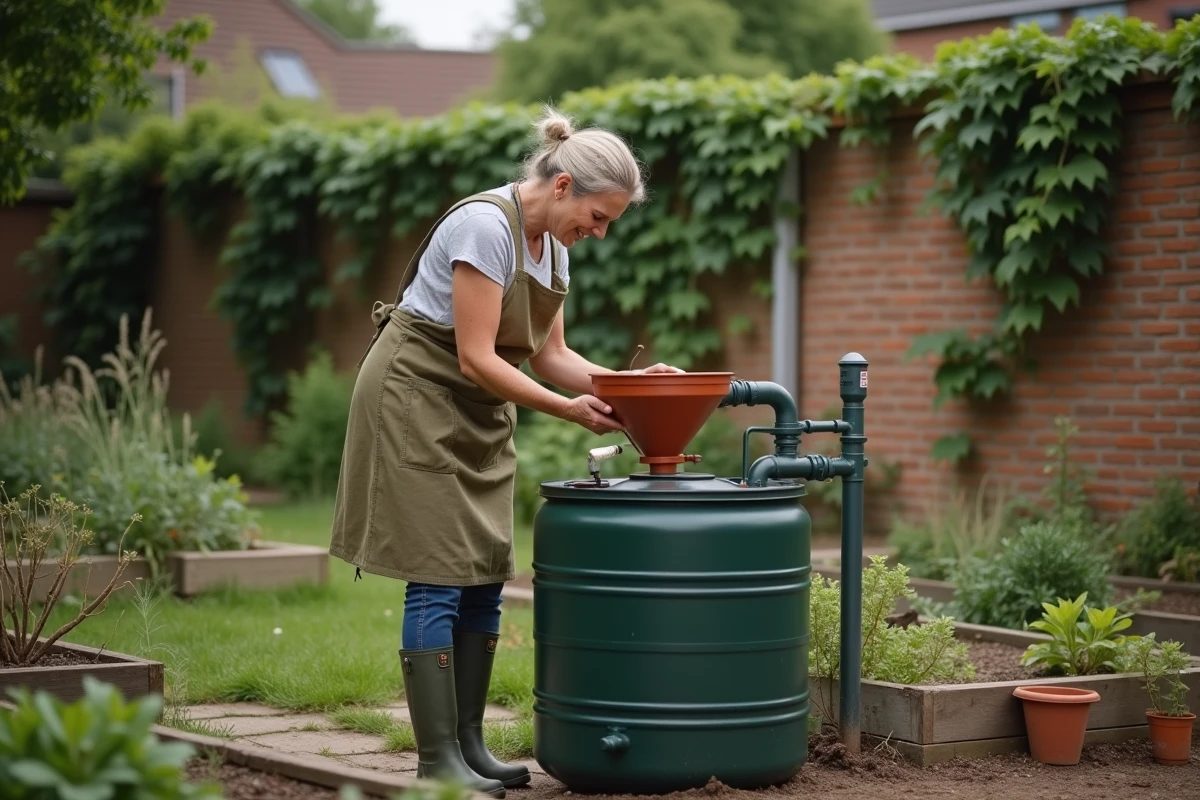
Collecting rainwater without a roof requires rethinking the catchment area. While a traditional roof provides several dozen square meters of passive collection, the absence of this surface necessitates the creation or diversion of other runoff areas. The approach goes beyond simply placing a bucket outside: it involves land development, material selection, and local regulatory constraints that govern rainwater management on the property.
Alternative Catchment Surfaces for Collecting Rainwater
The principle remains the same as with a roof: an impermeable, sloped surface is needed to direct water to a collection point. Without a building, three categories of solutions emerge depending on the terrain configuration.
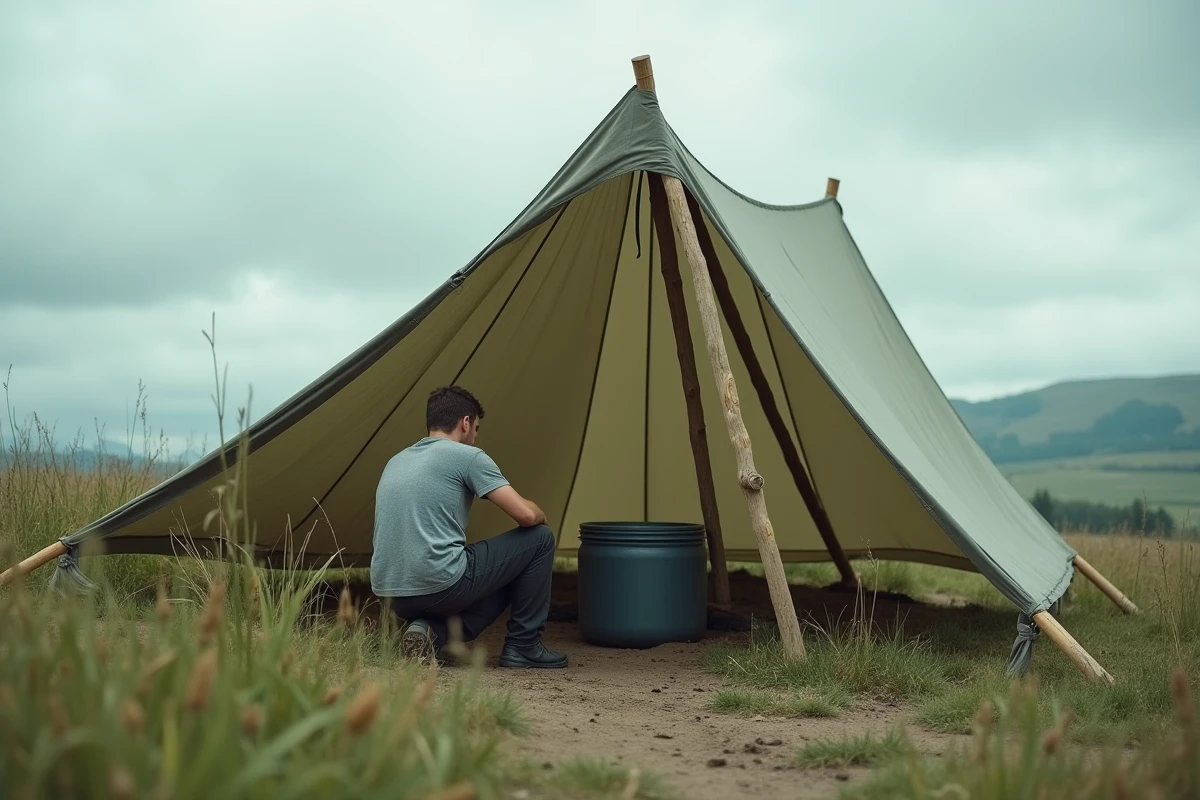
A tarp stretched between stakes is the most common setup. Its effectiveness directly depends on the quality of the material. A tarp that is too thin can tear within weeks due to UV exposure and the weight of accumulated water. Choosing a tarp made of EPDM or reinforced PVC, with a sufficiently dense weight to withstand an entire season, significantly extends the system’s lifespan.
Concrete paths, patio slabs, or paved courtyards represent often-overlooked catchment surfaces. By creating a slight slope towards a drain or a ditch connected to a container, these already impermeable areas become functional.
The water collected from soil runoff is more laden with particles than that from a roof, which necessitates a filter or a settling tank before prolonged storage. To delve deeper into this type of setup, the rainwater recovery advice on Le Jardinier Décorateur details several configurations suitable for gardens without gutters.
The third option involves lightweight structures: pergolas, fabric awnings, open shelters. Any rigid or semi-rigid surface oriented with a slight incline is sufficient to channel water to a receptacle. The yield remains modest compared to a roof, but over a rainy season, the cumulative volumes justify the installation.
Storage and Filtration: Adapting the System for Ground Catchment
Collecting without a roof alters the nature of the recovered water. Soil runoff carries more dirt, plant debris, and potentially chemical residues (oil, herbicide) than roof water. A grid filter and a settling tank are essential before any prolonged storage.
The choice of container depends on the available space and the expected volume. Several options can be combined:
- Opaque polyethylene tanks (ranging from a few dozen to several hundred liters) remain the standard. The opacity limits algae growth. An airtight lid prevents mosquito breeding, a real health issue with any stagnant water.
- Reclaimed food barrels (former juice or cooking oil containers) offer an economical solution. Ensure they have not contained toxic products before reuse.
- Flexible tanks, placed directly on the ground under a terrace or shelter, allow for larger volumes to be stored without excavation. Their lifespan varies based on UV exposure and abrasion.
Recovered rainwater is reserved for non-potable uses in France. Health regulations strictly govern the authorized uses: garden watering, cleaning outdoor surfaces, and toilet flushing under certain conditions. Using this water for human consumption or dishwashing is prohibited, regardless of the collection method.
Rain Gardens and Swales: Capturing Water Through Land Development
Beyond tarps and tanks, catchment can be directly integrated into the landscaping of the land.
A rain garden is a shallow depression planted with species tolerant of temporary flooding, which receives runoff from a yard, driveway, or balcony. Water gradually infiltrates instead of flowing into the municipal drainage system. This system captures and retains water directly on the property, reducing the need for subsequent watering of plants installed in the area.
The landscape swale operates on a similar principle but in a linear fashion. Dug along a path or property border, it collects water by gravity and slowly redistributes it into the soil. In several French municipalities, urban planning documents and sanitation regulations now encourage this type of infiltration at the source.
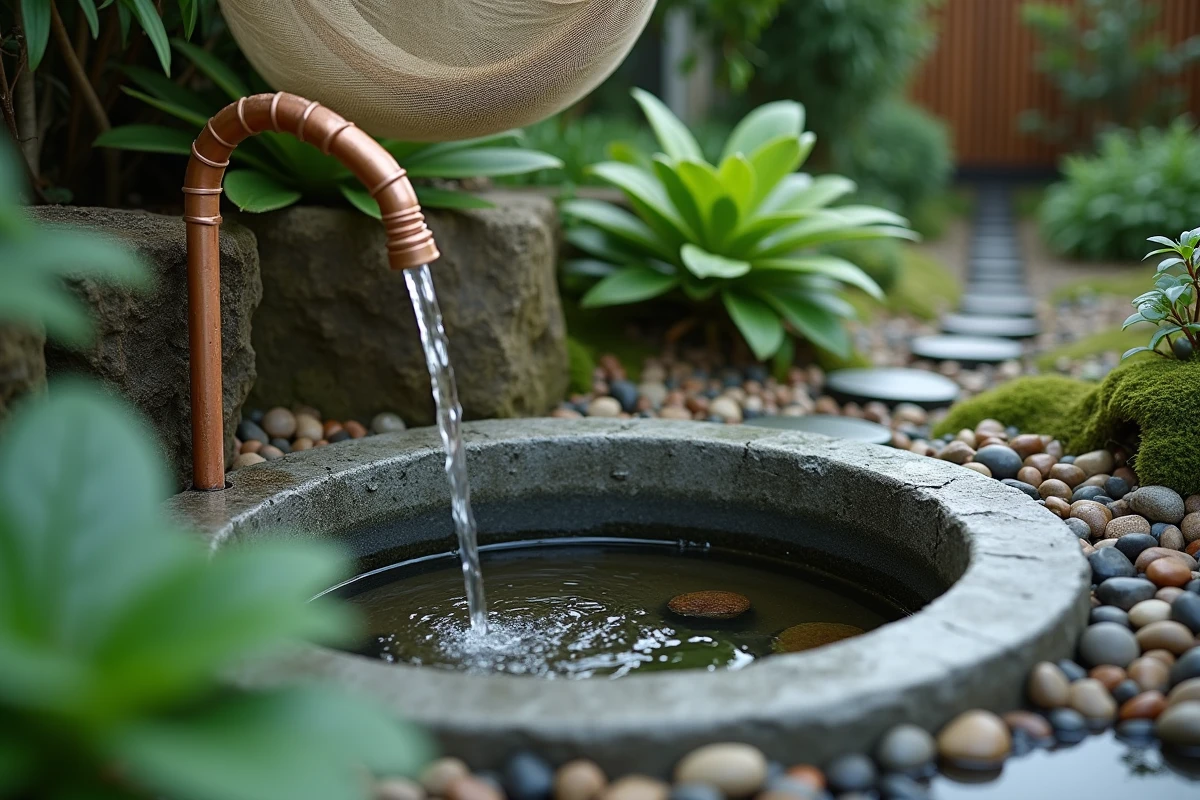
These solutions do not fill a tank. They do not allow for water storage for deferred use like watering during dry periods. However, they reduce watering consumption by maintaining more consistent soil moisture. Field reports vary on the actual effectiveness in Mediterranean climates, where rainy episodes are intense but spaced out.
Local Regulations and Limitations of Roofless Systems
Collecting rainwater does not occur in a legal vacuum. Several municipalities impose obligations for rainwater management on the property, particularly during development or construction work. These rules aim to limit urban runoff and flooding risks. A catchment system, even a DIY one, can fall within this framework.
On a balcony or apartment terrace, collection is still possible but with very limited volumes. An open container of a few dozen liters, a funnel connected to a watering can: solutions exist, but their yield only covers supplementary watering for a few planters. The condominium rules may also restrict the installation of tarps or containers visible from the outside.
The issue of mosquitoes consistently arises. Any uncovered stagnant water container becomes a breeding site, particularly for the tiger mosquito present in much of France. Covering each container with mesh fabric or a watertight lid is not optional.
The efficiency of a roofless system remains structurally inferior to that of a conventional installation connected to a roof. The catchment area is smaller, the collected water is dirtier, and the system is more exposed to the elements. The interest is fully justified for an isolated vegetable garden, a plot without a building, or supplementary use. Where a roof exists, connecting a gutter to a tank remains more effective and easier to maintain.