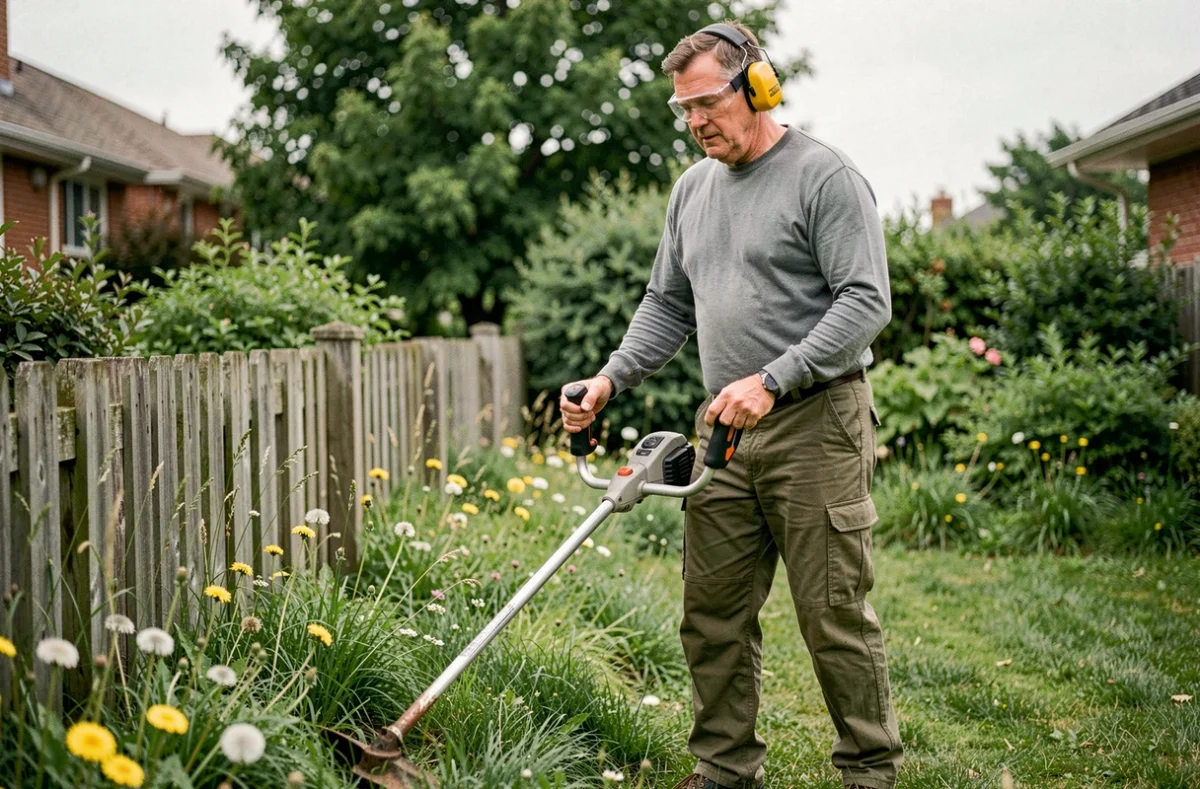
A sloped area with brambles that gain ground each week, a bank that the mower cannot reach, borders overrun by tall grasses: it is often in these concrete situations that one realizes a brush cutter is not a luxury. Choosing the right machine to maintain your garden involves starting from what you will actually be cutting, and under what conditions.
Noise level and local regulations: a criterion often underestimated at purchase
One usually thinks first of power, rarely of noise. A professional thermal brush cutter like the STIHL FS 460 C reaches about 101 dB(A) of sound pressure. Work regulations set a threshold for triggering preventive measures at 80 dB(A) and a limit value for exposure at 87 dB(A).
For a private individual, the constraint is different but just as concrete: the hours of use vary from one municipality to another. There is no single national time frame. Some municipalities allow use on Saturday mornings until noon, while others prohibit it. Checking the municipal or prefectural decree before purchase helps avoid neighborhood conflicts from the very first use.
If you live in a densely populated residential area and plan to brush cut regularly, a battery-powered machine (significantly quieter) may prove more practical than a powerful thermal model that you can only use a few hours a week. Today, a complete catalog of machines suited to these constraints can be found at debroussailleuse-warrior.com, with models classified by type of engine.
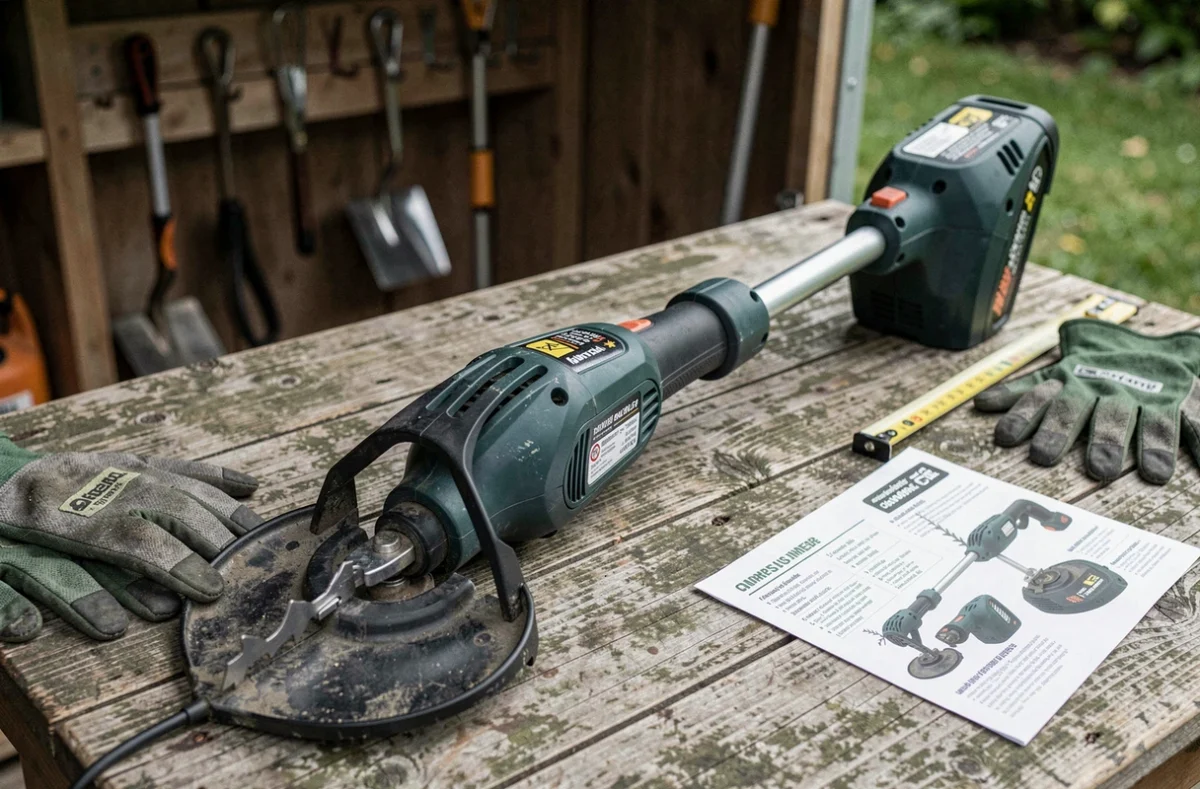
Thermal, battery, or electric: which engine for which terrain
The choice of engine directly stems from the area and vegetation to be managed. There are three categories, each with clear limits.
Thermal: brambles, wasteland, and large areas
The thermal engine (two-stroke or four-stroke) remains the reference for tackling thick brambles, undergrowth, or a wasteland that has not been maintained for several seasons. The available power allows for the mounting of a three-tooth blade or a clearing disc without the engine stalling.
The downside: weight, noise, mechanical maintenance (spark plug, air filter, oil-gas mixture for two-stroke). On a medium-sized garden that is regularly maintained, it is often oversized.
Battery: the evolving compromise
Battery models now cover the majority of domestic uses. Tall grasses, borders, finishing touches around flower beds, maintenance of accessible banks: the autonomy of a recent battery is sufficient for reasonable work sessions. Feedback on this point varies according to brands and battery capacity, but continuous cutting rarely exceeds an hour.
The decisive advantage remains comfort: instant start, no mixture to prepare, sound level well below that of thermal engines.
Wired electric: limited but relevant use
The wired electric brush cutter is suitable for small gardens close to a power outlet. The cord limits the range, reserving it for borders and areas near the house. However, it is cheaper and requires almost no maintenance.
Nylon line, blade, or disc: adapting the cutting head to the vegetation
The cutting system radically changes the machine’s efficiency. Mounting an unsuitable attachment means exhausting oneself for mediocre results.
- Nylon line (round or square) is suitable for soft grasses, cereals, and border finishes. It is the most common and least dangerous consumable in case of projection.
- Two or three-tooth blades tackle dense grasses, thick nettles, and small brush. It requires a machine with enough torque to avoid stalling.
- The clearing disc (circular saw type) is reserved for brambles, stump shoots, and woody undergrowth. It necessitates a powerful thermal engine and a serious carrying harness.
On most brush cutters, the cutting head can be changed according to the task. Checking the compatibility of accessories before purchase helps avoid being stuck with only one type of equipment.
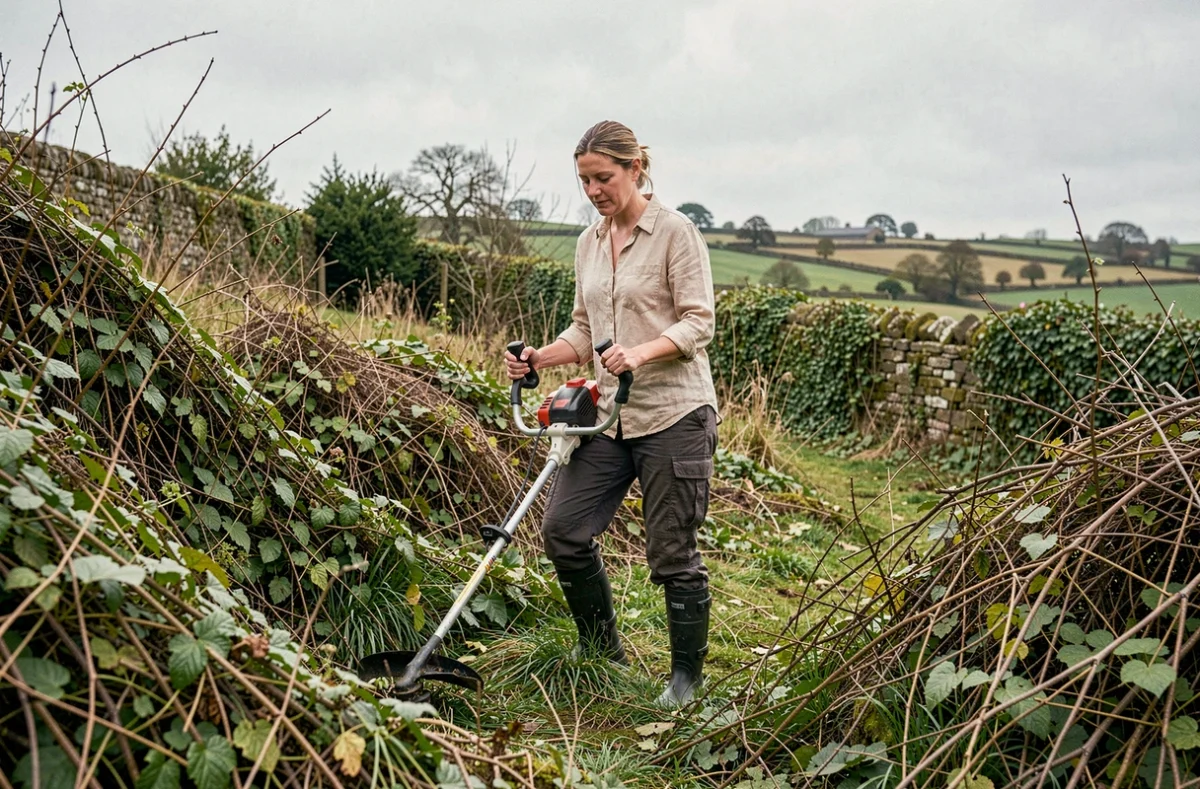
Carrying comfort and weight: what makes the difference after thirty minutes
In-store, one weighs the machine for a few seconds. On the ground, one carries it for an hour or more, often on a slope or uneven ground. Carrying comfort then becomes the number one criterion.
Shoulder-mounted brush cutters with a simple strap are sufficient for short sessions on flat terrain. As soon as you work on a slope or for more than thirty minutes, a double strap harness with a suspension hook radically changes the fatigue felt. Backpack models, where the engine rests on the user’s back, distribute the load even better but are more expensive.
The total weight varies significantly depending on the type of engine. A battery-powered machine generally weighs less than a thermal model of equivalent power, which matters when maintaining a garden on uneven terrain.
Brush clearing obligations: sometimes mandated by law
In areas subject to legal brush clearing obligations (OLD), maintaining the land is not optional. Brush clearing must be maintained year-round, not just before summer. Non-compliance can lead to a formal notice.
This constraint directly influences the choice of machine: a model capable of operating several times a year without breaking down is needed, with a cutting system adapted to the local vegetation (maquis, garrigue, Mediterranean brush). In this context, investing in a reliable and easy-to-maintain brush cutter is not a luxury but a regulatory necessity.
The choice of a brush cutter boils down to three practical questions: what type of vegetation to cut, over what area, and how often. Starting from these answers naturally guides you towards the right engine, the right cutting system, and the right level of comfort, without overpaying for unnecessary power or being under-equipped against a bank of brambles.